THE FORREST CENTER FOR EVOLUTIONARY ASTROLOGY

Many of you are, I suspect, at least dimly aware of the fact that I have a school. It’s a source of pride and joy to me. I’d like to take this opportunity to introduce you to it a bit more deeply and try to place it in the landscape of everything that’s happening in the contemporary world of astrology.
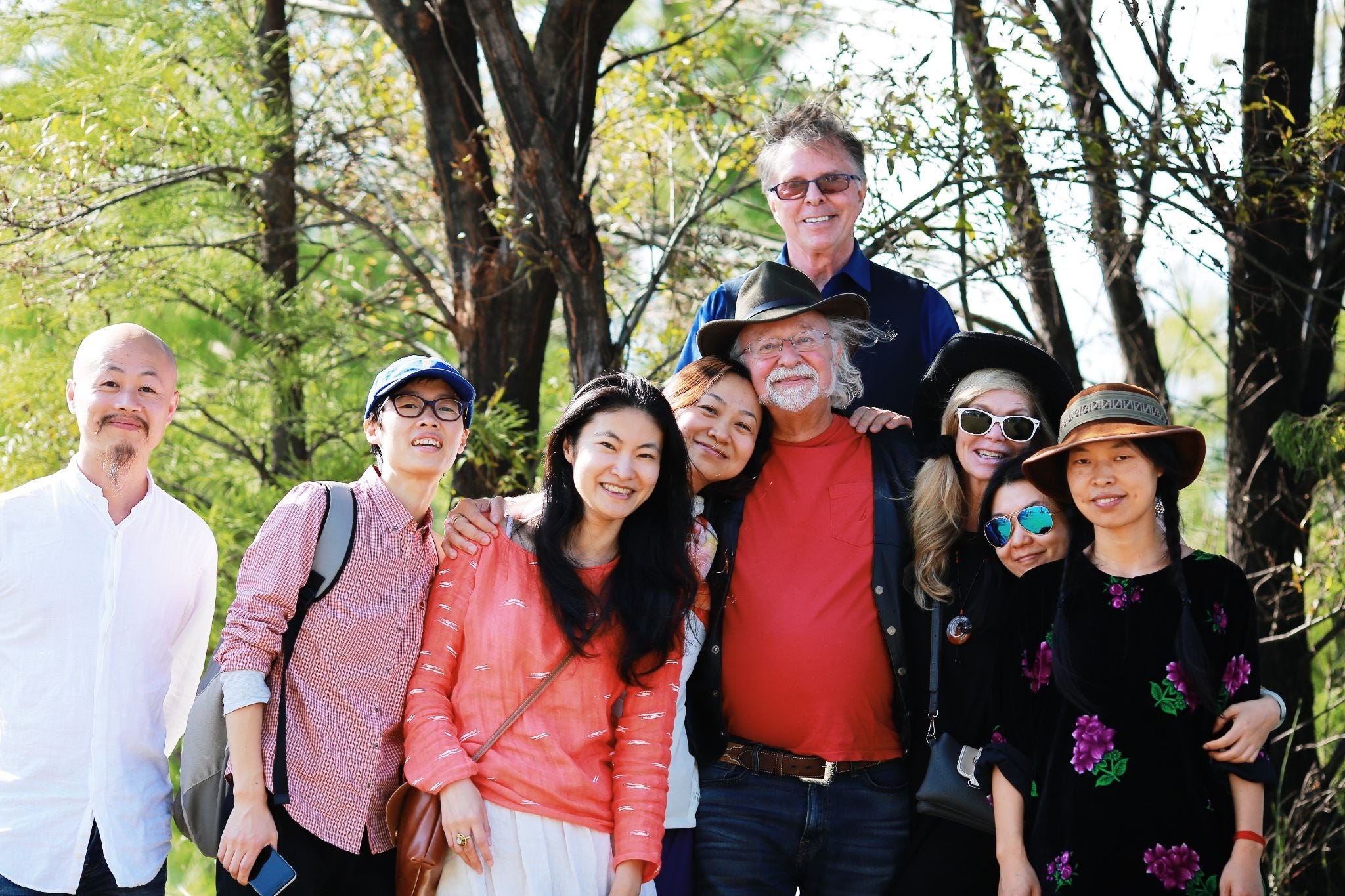
For twenty years or so starting in the late 1990s, I flew all around the world teaching my ongoing Apprenticeship Programs. These were live events, each one lasting four or five days. Three such programs were held bi-annually in the United States, but we also had ongoing programs in Australia, Europe, and China. They were very “tribal” experiences, with lots of intimate astrological sharing, much of it propelled by the inevitable fact that during those years many of us passed through various biographical milestones – births, deaths, and relationships starting and ending. All that joint experience helped to forge a real sense of community among us.
All in all, something like two thousand people attended these programs over the years. Many went on to become professional evolutionary astrologers, serving their communities around the world.
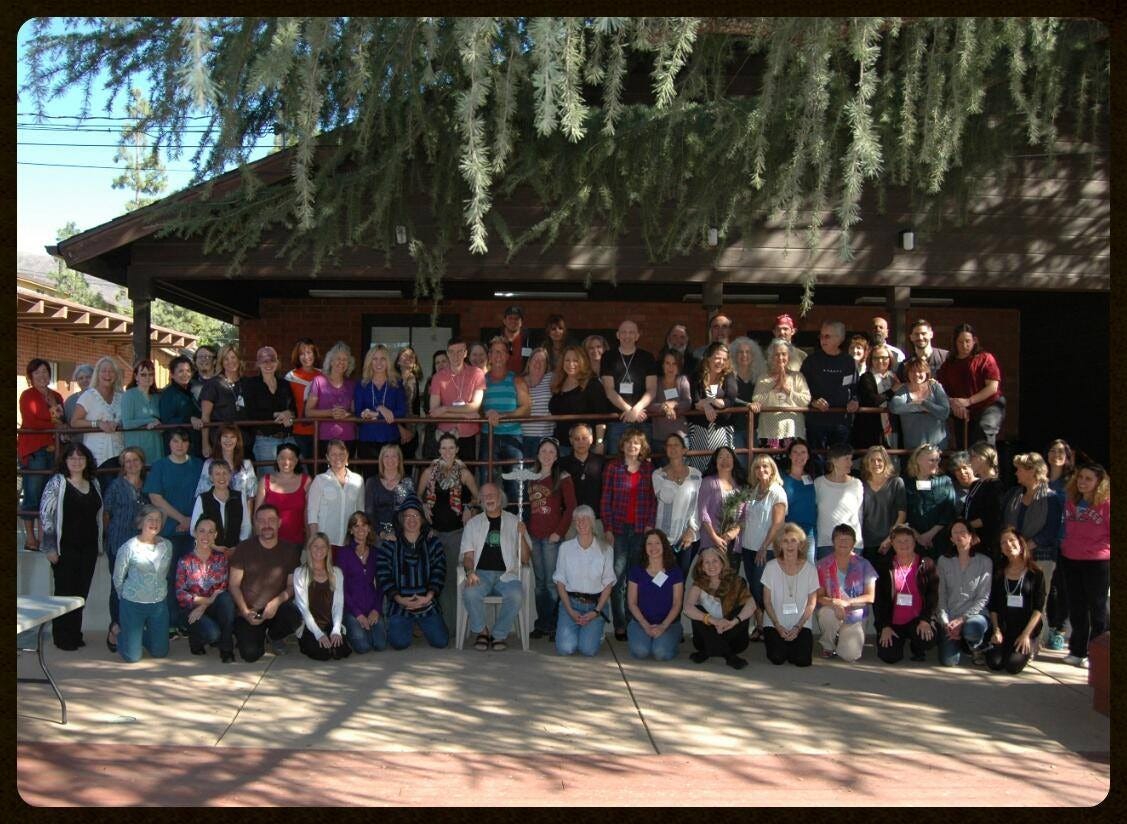
I loved the “AP,” but as I got older, the wear and tear of endless air travel was getting to me. I was also aware that the programs had some built-in design flaws. First, there was no testing. Students received certificates of completion after attending three full programs, then a second advanced certificate after attending three more. But, other than that, no one received any comprehensive personal feedback about how their learning was coming along. With so many students involved, I just didn’t have time to give each one of them that kind of individual attention.
The second problem was perhaps deeper. When the AP’s began, I envisioned a structured A-to-Z education in the emerging methodology of evolutionary astrology. That approach worked – once – in Kansas. But when I got to “Z,” the students wanted me to continue. So I did – and the result was that the content of the programs turned into a sort of random potpourri – in each meeting, we would cover some important dimension of astrological practice, but the classes fell in no particular order. One result was that a student might earn a certificate without ever happening to take the course in, say, solar arcs or synastry. Inevitably, that meant that people graduated with gaps in their knowledge.
In many ways, The Forrest Center for Evolutionary Astrology has been an attempt to address those problems. It’s a true “soup-to-nuts” program, starting with revisiting the astrological basics in a fresh way and culminating in a small master class which I teach myself, ably assisted by our Dean, Dr. Catie Cadge. Along the way, students learn essentially everything that goes into becoming a “full service” evolutionary astrological counselor – natal chart analysis, predictive techniques, synastry, and so forth. At each level, they are tested and helped along if they need it. The full FCEA program runs three or four years, depending on some personal choices the students make about pacing. In terms of rigor, it’s analogous to attending law school or earning a Masters degree in psychology.
Bottom line, if someone is among our ever-growing number of FCEA graduates, I’d send my own mother to them for counsel. I have full confidence that they know what they are doing.
Here’s Catie:
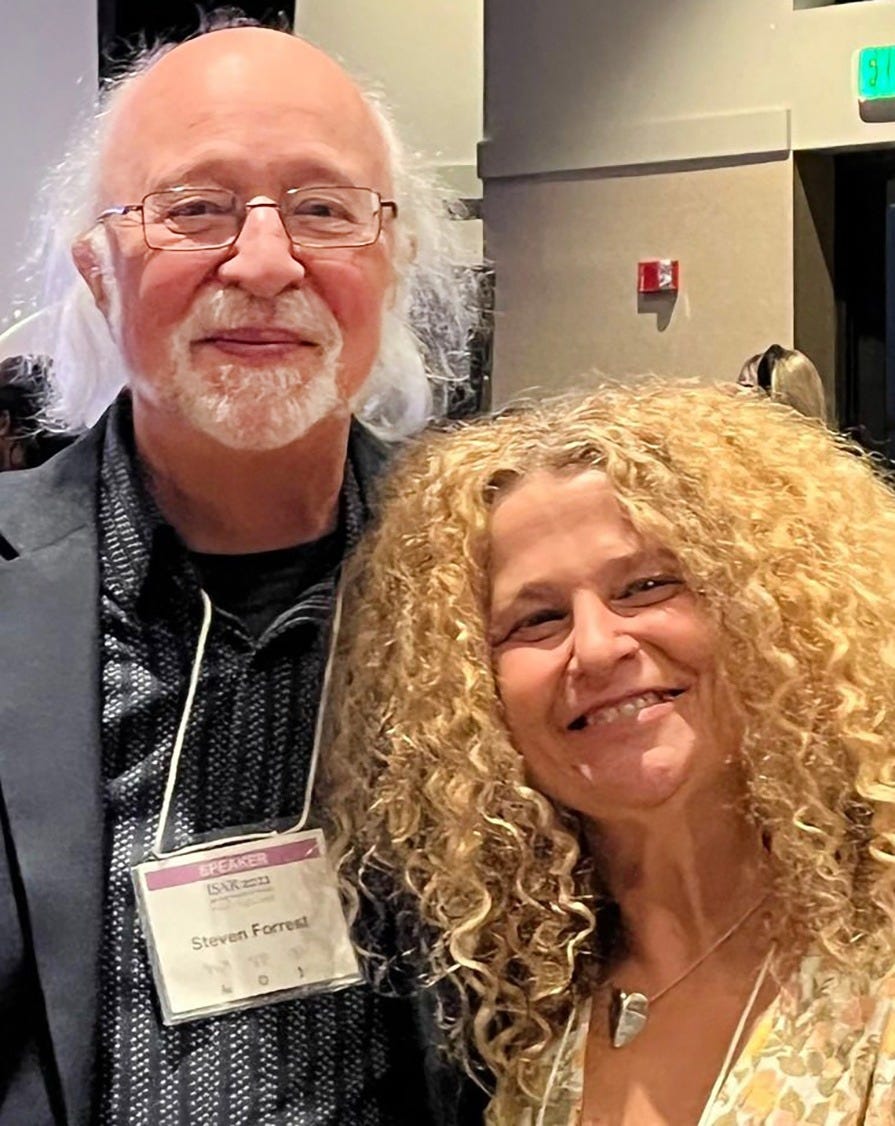
TRADE SCHOOL
We call ourselves a “trade school for the soul,” but why a trade school? That’s because we focus on providing the most direct path possible to astrological competence in a very specific style of professional astrology, which we call the “Steven Forrest Method.” Only half-jokingly I like to say that studying in the Forrest Center for Evolutionary Astrology shaves hundreds of years off the process of “learning everything about astrology.” All respect to the Hellenists, Jyotish, Uranians, Siderealists, and so on, but no one in The FCEA studies those methods, at least not in the context of the school. We respect them all, but we focus on conveying one single approach out of many – one that aims to empower our students to make their living as astrological counselors if they so choose. That’s why we call ourselves a trade school rather than a university.
I’d also add that even though I am sincere in my “big tent” view of astrology, I have never met an astrologer who chose to practice the second-best form of the craft they had ever found.
SCREEN TIME
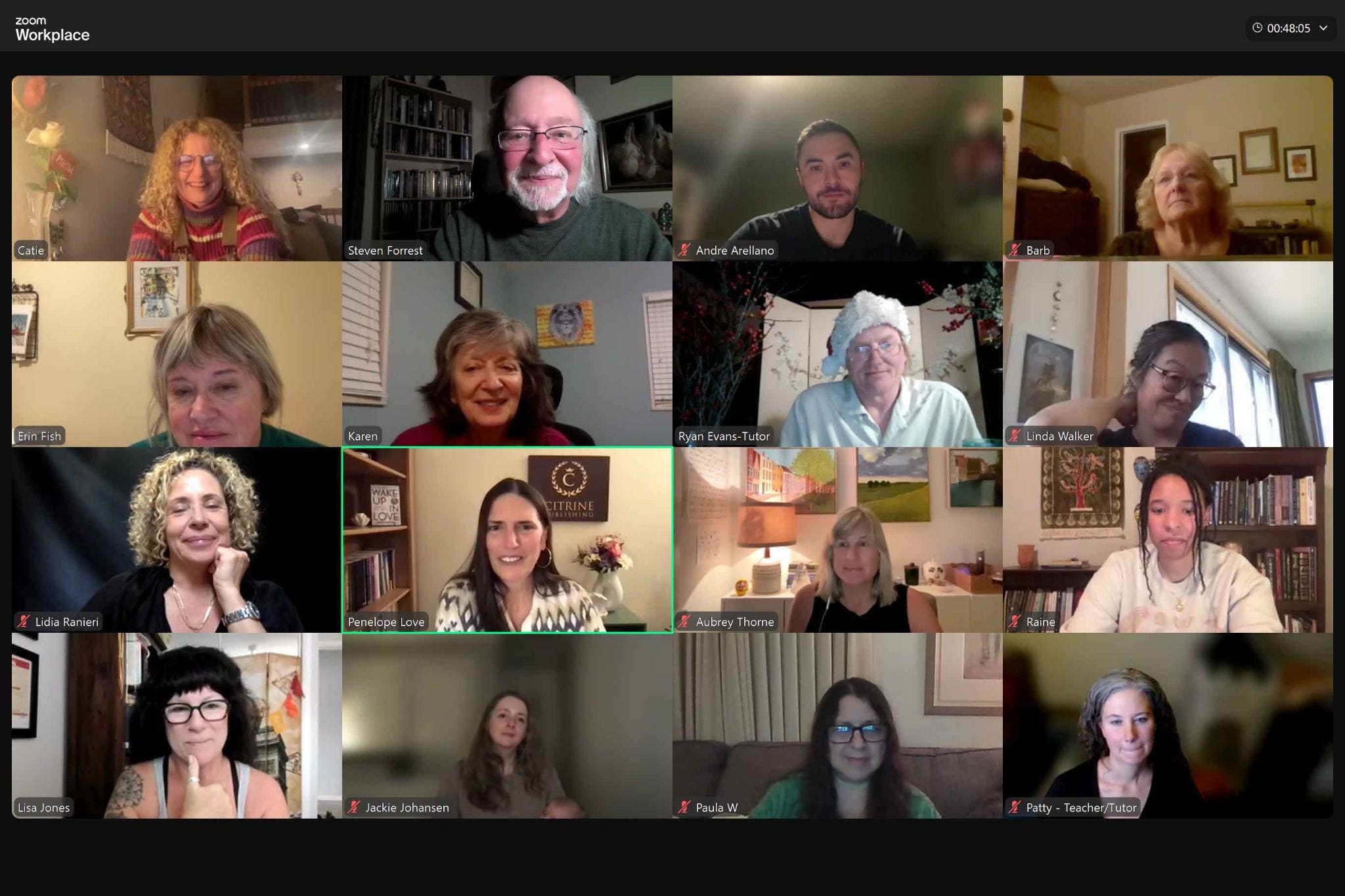
The entire FCEA program is taught online, although we’ve also done occasional “live” programs in Europe and the USA. I was initially hesitant about teaching astrology without the hard-to-define magic of face-to-face transmission – more about that in a moment. Two huge positives have emerged from our online approach though. The first is quite personal: I’m spending a lot less of my life standing in airport lines and dealing with the stress and abuse of modern air travel. That’s probably added years to my life.
Secondly, because the FCEA is an online phenomenon, it’s vastly more accessible to a diverse range of students from all over the world. The old AP’s were full of fine human beings, but apart from my programs in China, there was a distinct “skew” in the direction of middle-class people of Caucasian genetic heritage. That trend is blessedly less obvious in our school. By eliminating travel costs, the FCEA is more of an open door financially too, which again enhances diversity.
We also offer a few scholarships.
What about the downside of online teaching as opposed to the “live” experience? The difference is real, and there’s much that I miss about the human immediacy of the older groups. Knowing people’s charts really well while also knowing them really well is a fast track to astrological mastery. When it comes to getting a living astrological education, there’s nothing that can compare with that happy combination. The apprenticeship programs were rich in those treasures; less so, the FCEA. Still, I can honestly say that the genuine warmth and sense of connection we experience in the school has pleasantly surprised me.
I should also add that what I write here about the positives and negatives of online education is very much about my rather unique experience in the school. My own “real time” contact with the students is limited to monthly collective Zoom meetings and the final master class. Those master classes are small groups, typically with about ten people, so they are actually quite intimate. Catie and I meet with them weekly for several weeks. The students themselves do most of the work as they present interpretations of assigned charts, with Catie and me commenting and coaching. Those classes are really my first chance to have any in-depth interaction with individual students.
For everyone else, the ongoing classroom experience is very different. There, throughout the curriculum people actually have a chance to form close bonds with each other and with our wonderful team of tutors. While it is possible for a student to experience the FCEA courses in a “self-paced” fashion, most of them opt for these structured, scheduled online classes. Currently, we have nineteen tutors. A number are FCEA graduates. They’re all carefully screened, not only for their astrological skills, but also for their kindness and caring.
I should add that long before students arrive at the master class where I finally get to know them personally, they’ve certainly seen my face often enough! Along with my books and countless technical papers, the FCEA curriculum is composed of about 250 instructional videos I’ve made. Some are a few minutes long, while others run multiple hours. So I’m definitely “there” for the students right from the beginning, but only in the form of digital imagery.
COMMUNITY MEMBERSHIP
We are quite aware that being a student in the FCEA is a major commitment of time and energy. Not everyone is in a position to offer that. For the sake of building a sense of community among the students, we don’t let “outsiders” participate in any of our classes – there’s no auditing or anything like that. That’s simply because students share at a personal level and that requires trust, which just doesn’t come as easily when there are strangers listening.
Still, we wanted to provide a way for people who weren’t actively enrolled in the school to be part of it. That’s why we created “Community Membership.” For US$99 per year, members get access to four of our monthly two-hour webinars per year as well as some other bennies. You can read about them on the school’s website – forrestastrology.center.
In those webinars, the submitted questions range widely, but they tend to be technical – we are, after all, a school. The webinars are all livestreamed, but they are also archived and indexed. A Community Member, for example, might search for any comments I might ever have made about Pluto-Venus aspects and be directed to an exact time in an archived webinar from some years ago. Those videos are like a huge astrological encyclopedia that grows a little larger every month. At the risk of sounding like a salesman, I think Community Membership in the FCEA is the biggest bargain in AstroWorld.
THE TEAM
The Forrest Center for Evolutionary Astrology is far too complex a beast for me to have created it all by myself. In 2020, I sat down with my friend Jeff Parrett and the woman who was destined to become our beloved Dean, Dr. Catie Cadge. We began to hash out the basic structure of the school. Jeff had enormous business acumen and Catie was a professor of art at De Anza College with considerable experience, not only in teaching, but also in the emerging paradigms of online education. Jeff kept us on track in the “real world,” and also provided the loan that got us started.
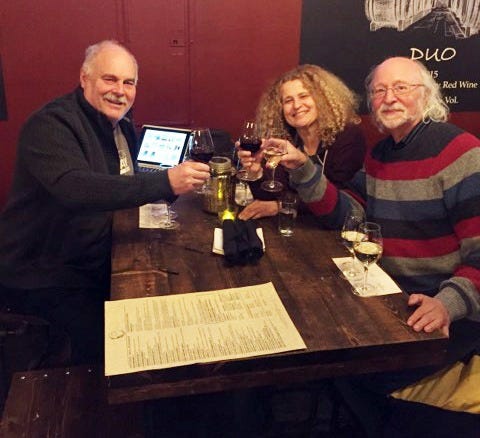
Penelope Love soon became our Communications Coordinator and Registrar. I can’t think of anyone whose surname fits them better than Penelope’s. She is enormously effective and one of the most genuinely caring people I have ever met. Carlos Velazquez keeps the “tech” upon which the school depends up and running. Paula Wansley counts the beans – and keeps Catie and me safe from any fatally ungrounded business practices that we might find attractive, such as passing out scholarships like candy on Halloween. Dr. Joey Paynter teaches our counselling classes – we felt that having a person with a formal psychological education would be appropriate in that role. Finally, Ruby Glasspool over in the U.K. is a master coordinator of events. If your cats need herding, call Ruby.
Then there’s our team of nineteen tutors. I won’t name them all here, but without them, there would be no school at all.
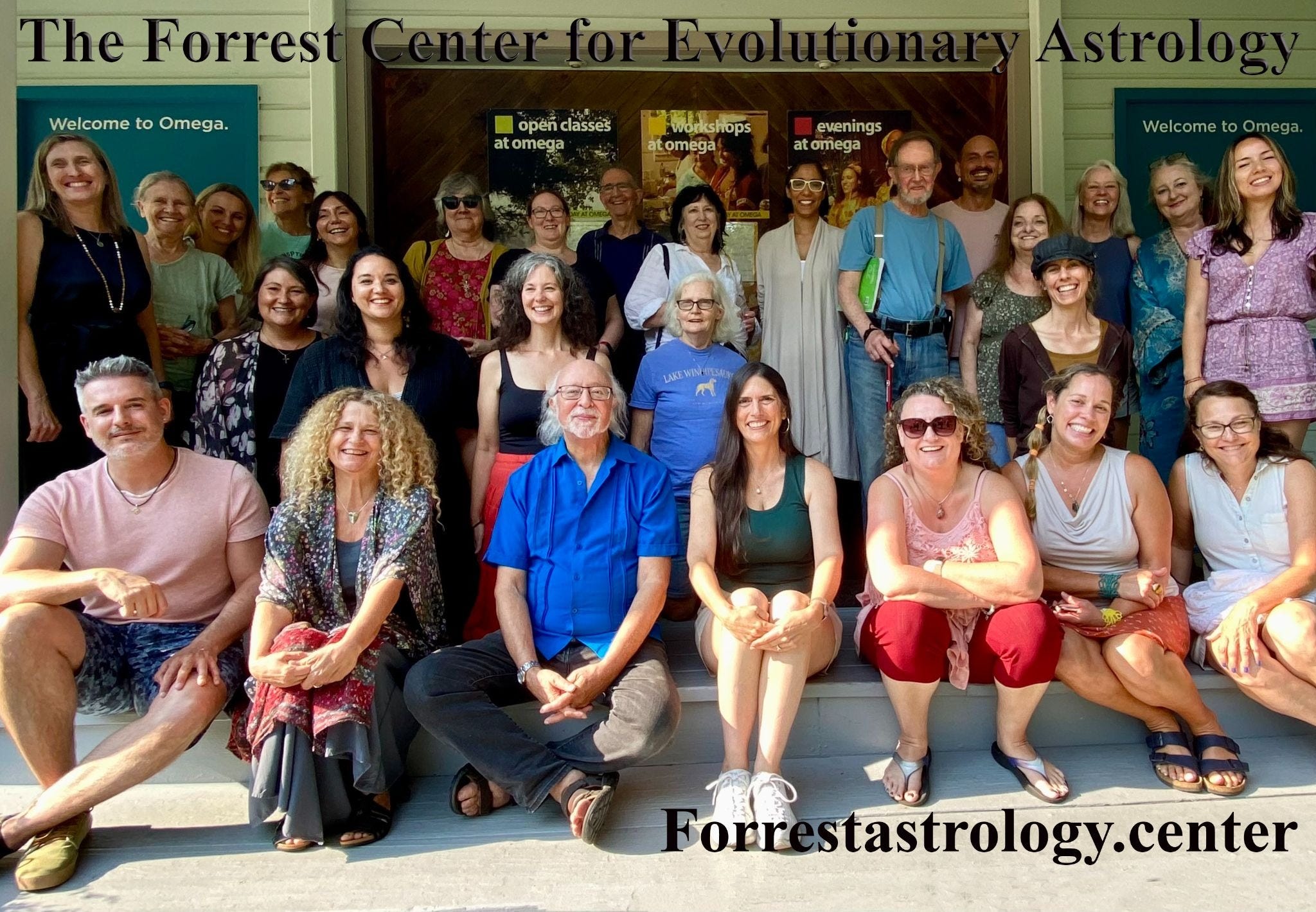
On a personal note, as I write these words I am seventy-seven years old. I’m basically healthy and I still have my mental marbles. I hope to hang around a while longer. But knowing that when I exit this world, I’ll be leaving this school as an ongoing institution is an enormous comfort to me. This is a holy flame that needs to be kept burning. My profound thanks to everyone who has been part of it and made it possible.
Again, if you want to know more, our website is forrestastrology.center.
From the time I first read The Inner Sky in the 1980s to my bizarre discovery of your apprenticeship program in 2009, feeding me right into brilliant FCEA, on my convoluted, episodic career path, just proves there are no accidents in astrology! It is, after all, “the art of choice”
Thank you so much for sharing the story of the school, its origins and how it has evolved. The care and dedication you have put into it transpires from everything you say. Thank you also for the practical details about the methods, teachers!